Quantify Impacts and Opportunities in Your Supply Chain
Many organisations depend on the consistent (and cost effective) supply of commodities from the upstream value chain. However, supply chain disruption is a growing, material issue facing businesses. Risks can arise from physical nature-related disturbance, or the emergence of new regulations that force changes to sourcing criteria. Both sustainability and procurement teams should be equipped with the right data to inform sourcing decisions in the short and medium-term.
How Natcap can help:
Map and Mitigate Nature and Biodiversity Risks in Your Supply Chain
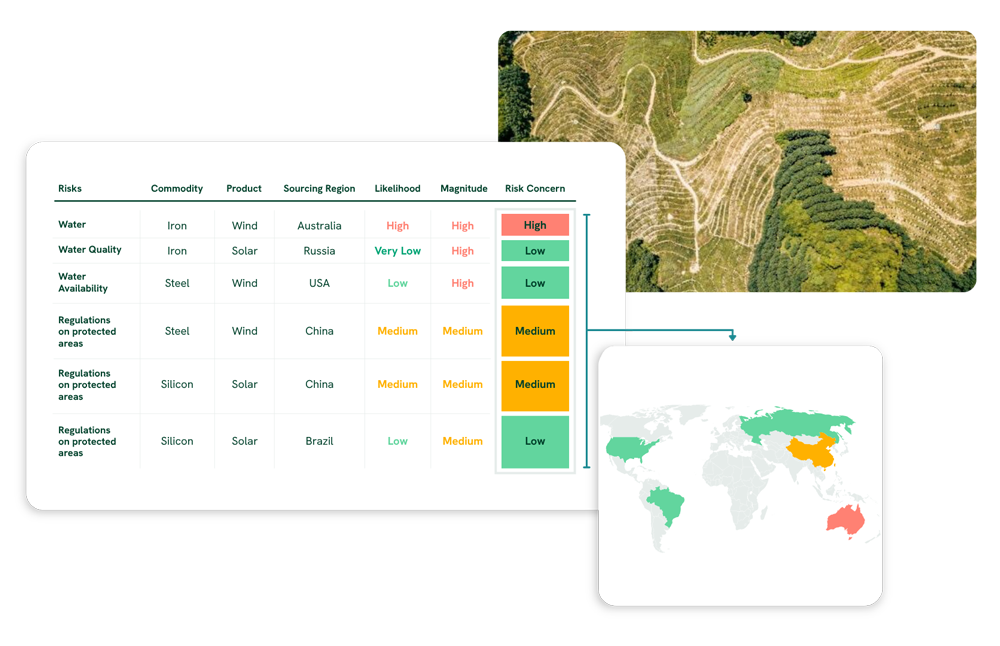
Natcap’s approach enables organisations to get a holistic view of risk exposure across high impact stages of their supply chain. With the ability to flex to data availability, Natcap utilises science-based metrics to hotspot the primary sources of risks and opportunities, at a commodity, sourcing location, product and/or supplier level.
The objective of this assessment is to:
Provide a comprehensive and robust view of nature- and biodiversity-related risks arising from your supply chain
Build an in-depth understanding of how nature can affect your supply and raise risk to your business
Provide a compelling case study for engagement on nature- and biodiversity-related supply chain risks in the business
Generate Actionable Insights
Natcap’s comprehensive approach means you can evidence-base the impacts, dependencies, risks and opportunities across your supply chain, leading to a range of outcomes:
Be confident in communicating your material impacts from your supply chain
Understand which product, commodity and location are likely to have the greatest impacts and dependencies
Inform impact mitigation actions and build a program for supply chain resilience and transformation
Make the case on the importance of nature in your supply chain
Aligned with Key Sustainability Disclosure Frameworks