

At COP17 in Yerevan, governments struggled to resolve how nature’s recovery would be financed. Funding pledges announced during the conference’s high-level segment totalled $1.8bn. The talks nevertheless left unresolved how to reach the agreed goal of mobilising at least $200bn annually for biodiversity by 2030.
Days later, the OECD reported that agricultural support across 56 countries exceeded $950bn in 2025, up $121bn since 2023. With new money for nature proving difficult to secure, the environmental effects of support already flowing through agriculture deserve closer attention.
Much of that support serves objectives such as farm incomes and food security. But the way it is designed also shapes how farmers use land and water, creating scope to deliver better environmental outcomes through policies already in place.
A US federal programme alone provides more than $16bn for agricultural disaster losses in 2023 and 2024, illustrating the costs public budgets already bear when production is disrupted. Such assistance protects livelihoods. The question is whether agricultural policy could also do more to reduce farmers’ exposure to future losses.
The price of water
Subsidised water and electricity make pumping cheaper, helping farmers maintain production and contain costs. Where water is scarce, however, those incentives can encourage greater abstraction, leaving less for ecosystems and other users.
The result can be a gap between the private cost of production and the pressure it places on a shared resource. A farm benefits from cheaper water today; the consequences of depletion extend across the basin and into future growing seasons.
Technology does not automatically resolve the problem. In its 2025 review of agricultural support’s environmental effects, the OECD finds that subsidising more efficient irrigation can encourage farmers to expand production, offsetting the water savings. Greater efficiency on an individual field does not necessarily mean less water consumed across a basin.
For buyers of agricultural commodities, the distinction matters. A sourcing region may look competitive partly because public policy keeps input costs low. Those prices may reveal little about whether production can be sustained as water becomes harder to obtain.
Reform has a transition cost
Agricultural support could help farmers finance better soil management, habitat protection and sustainable water use. Advice, upfront investment and predictable agreements can make changes affordable and give farmers confidence to commit.
That assistance matters because farmers have invested in equipment, selected crops and built businesses around the rules in place. Removing support can expose them to higher costs before they have the means to adapt. In depleted basins, funding should support reductions in total abstraction.
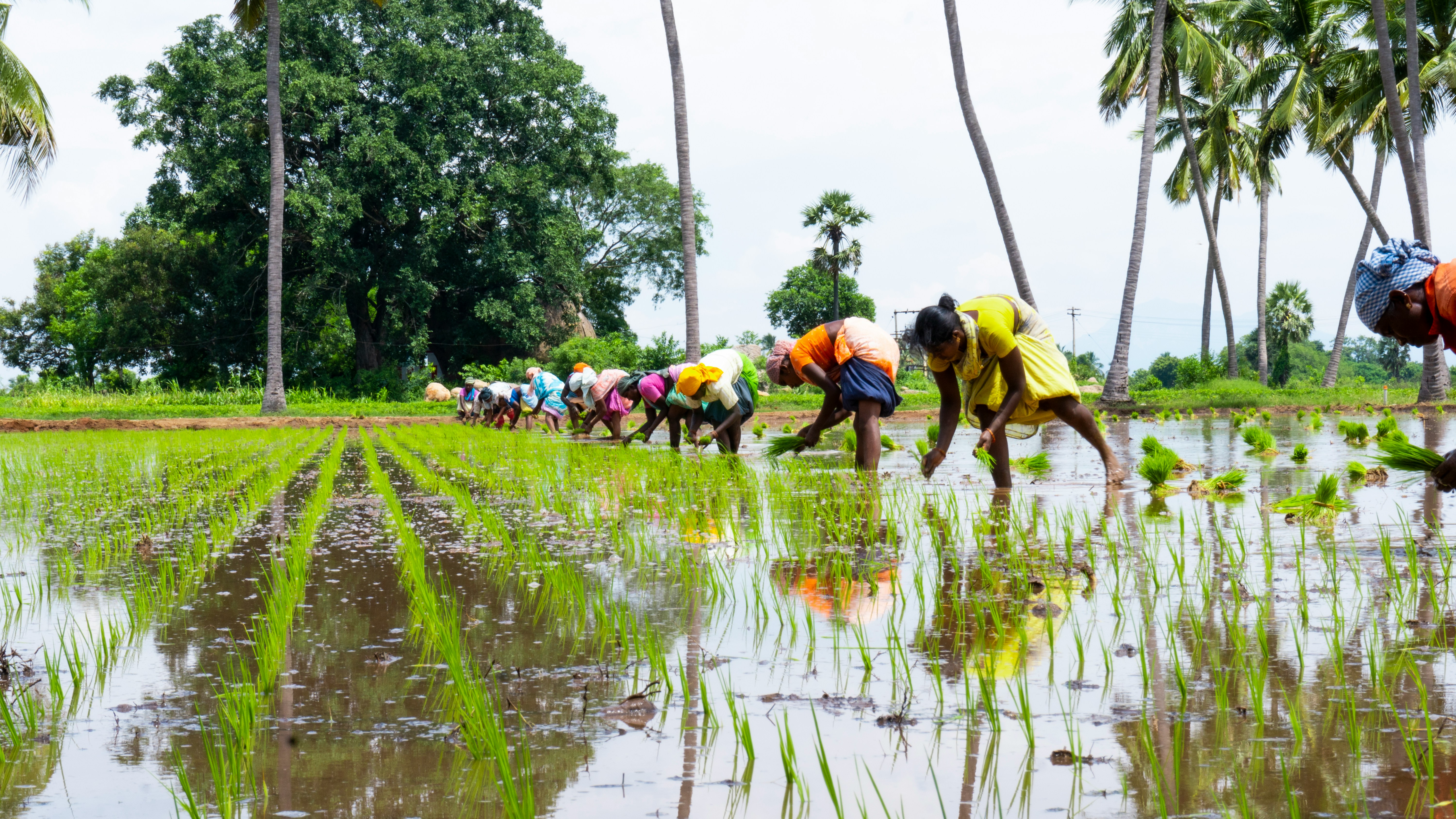
The OECD’s assessment of India sets out one proposed approach. It recommends gradually reducing fertiliser, irrigation-water and electricity subsidies while directing resources towards infrastructure, skills, more sustainable input use and resilience. Direct cash transfers could help support poorer farmers through the transition.
Governments must assess who bears the costs of reform and whether replacement policies deliver the intended benefits. In a depleted river basin, success would mean lower abstraction and improved water availability, alongside viable farm businesses. Programmes elsewhere may need to track soil condition, nutrient losses or habitat quality, as well as their effects on farm incomes and production.
Beyond the farm budget
Food companies and agricultural lenders have a stake in these decisions. Public incentives help shape suppliers’ costs, investment choices and exposure to resource constraints. Their effects belong in assessments of long-term supply and credit risk.
A buyer investing in water stewardship, for example, needs to understand whether local agricultural policy encourages further abstraction. Improvements funded on individual farms may be undermined by increasing consumption elsewhere in the basin. Where public programmes instead help farmers adapt, buyers and lenders may be able to finance complementary changes, making the transition more affordable.
New funding remains necessary for nature’s recovery. Governments will still need to help farmers after disastrous seasons. Better use of agricultural support could also help preserve the conditions for a successful harvest.